
The Contractor Lead System: Photos, Maps, and the Follow-Up
Contractors win the map pack with real job photos and win the job with the follow-up after the quote. Here is the system, including the geotagging myth.
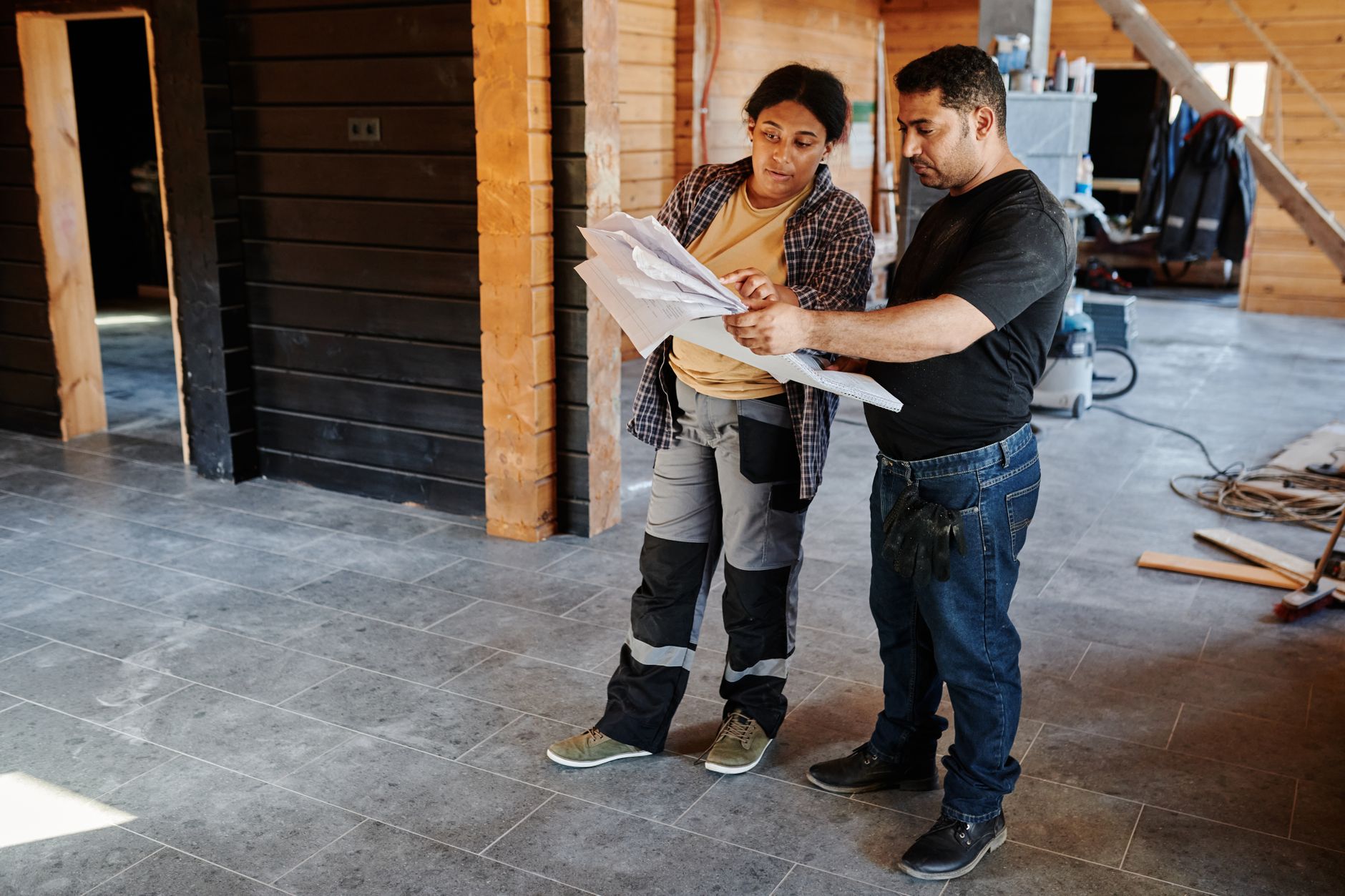
Your best marketing asset is the phone in your truck, and you are using it wrong.
The map pack is the whole game for contractors
When somebody needs a roof, a panel upgrade, or a bathroom done, they open Google Maps or they type “near me.” They pick from the three businesses Google shows them. That is the market. Everything below the map is a consolation prize.
So the question is not “how do I rank on Google.” It is “how do I get into those three.” And for contractors specifically, the answer leans harder on one asset than most owners expect: photos of your actual work.
The correlation in the data is hard to ignore. Listings ranking in the top three local positions average around 250 photos, compared with fewer than 200 for listings in positions four through ten. BrightLocal’s Google Business Profile research found that profiles with 100 or more photos receive 520% more calls, 1,065% more website clicks, and 2,717% more direction requests than the average business.
Straight talk before you act on those numbers. That is correlation, not proof of causation, and the giant percentages are averages against a low baseline, which always looks dramatic. Businesses with 250 photos are usually also the businesses doing everything else right. But the practical instruction survives either way: profiles loaded with real work photos outperform empty ones by a wide margin, and photos are free. You are already standing on the job site.
More modest and more reliable: profiles with more than 10 photos get roughly 35% more website clicks than those with fewer, and profiles with fresh photos get about 42% more direction requests.
Do not geotag your photos
This one deserves its own section, because half the local SEO advice aimed at contractors still tells you to do it and there is now a real test saying do not.
Evergrow Marketing ran geotagged images across 27 lawn care clients over 10 weeks, posting twice weekly with EXIF coordinates set to specific target towns, and tracked seven ranking metrics with Local Falcon. The result was one win and six losses. “Near me” queries improved in the specifically targeted areas. Six other metrics showed no change or a decline, and city-name searches like “lawn care [city]” actually got worse.
Their conclusion, in their words: it helps the near-me queries in the areas you target and hurts everywhere you do not. They stopped recommending it to clients.
It is one agency study in one vertical, so hold it loosely. But it is real testing against a practice that was always more folklore than evidence, and the downside case is now documented. Spend the effort on photo volume and quality instead. That is where the correlation actually lives.
Related: Google’s image systems are good enough now to tell original photography from stock. A profile full of licensed stock kitchens is not just weaker for trust, it is contributing nothing. Your phone photos of your actual crew doing actual work outperform professional stock every time.
The photo system that fits in a work day
The reason contractors have empty profiles is not that they disagree with this. It is that nobody owns it and it never gets done. So make it mechanical.
Three photos per job, taken by whoever is on site. Before, during, after. That is the entire ask. A twenty-job month becomes sixty photos.
Shoot the ugly parts. The rotted subfloor, the melted breaker, the failed slope. Damage photos convert better than pretty finished shots because the homeowner recognizes their own problem in them. Finished work sells taste. Broken work sells urgency.
Get the crew and the truck in frame regularly. Real people build trust that a finished bathroom cannot. It also proves you are a real local operation, which is exactly the thing homeowners are trying to verify.
Upload weekly, not in batches of 200. Freshness is a signal. A steady drip beats one giant dump every quarter.
Name the files like a human. Not IMG_4471. Describe what it is. It costs three seconds.
Assign this to one person with a recurring calendar reminder. Unowned, it will not happen, and this is the highest-leverage unpaid thing on your list.
Reviews are the other half of the map pack
Photos get you considered. Reviews get you picked, and review signals are among the strongest inputs to local ranking.
The mechanic that works for contractors is timing. Ask at the moment of maximum satisfaction, which is not a week later by email. It is standing in the finished room with the homeowner while they are visibly happy. Text the link from your phone while you are there. The completion walkthrough is the ask.
Two rules that keep you out of trouble. Never incentivize a review, and never review-gate by filtering happy customers to Google and unhappy ones to a private form. Both violate Google’s policies and both are exactly how profiles get filtered or suspended. We covered the safe version in how to get more Google reviews without getting suspended.
Respond to every review, including the bad ones, in a tone you would use in person. Prospects read the owner responses more carefully than the reviews. A calm, specific reply to a one-star complaint sells better than a wall of five stars with no responses.
The quote follow-up is where contractors lose the most money
Here is the part that is not about Google at all, and it is probably worth more than everything above.
You already quoted the job. You already drove there, measured, priced it, and sent it. That lead cost you real hours. Then most contractors send the quote and wait.
The homeowner is not sitting by the phone. They are getting two more quotes, talking to a spouse, checking financing, and waiting for a nudge. The contractor who follows up is not being pushy. He is the only one still visibly interested.
A follow-up sequence that works, and it is not complicated:
Same day, on delivery. Send the quote with a short note that says what is included, what it costs, and what the next step is. Then a specific question: “Do you want me to hold the week of the 14th?” A question gets a reply. A PDF does not.
Day two, a text. Short. “Did the quote come through okay? Happy to walk through any line on it.” Texts get read. Emails with attachments go to a folder.
Day five, add value, not pressure. A photo of a similar job you completed, or a note about a material lead time that affects their timing. Give them a reason to reply that is not “have you decided.”
Day ten, the honest close. “Are you still looking at this, or should I take it off the board?” This single message recovers more jobs than any other, because it forces a decision without pressure and gives people who went quiet an easy way back in.
Day thirty, the seasonal loop. Not dead, just later. Move them to a quarterly touch. Roofs, HVAC, and remodels have long consideration windows and people come back.
Wire this in a CRM so it fires without anyone remembering, and the same logic applies to the calls you never answered in the first place. A missed call with an automatic text back inside 30 seconds catches the homeowner while they are still on the site, which matters because most callers who do not reach you simply move on to the next name.
What to ignore
Chasing rankings for the whole county. Local ranking is distance-weighted. You cannot rank in the map pack across a fifty-mile radius from one address, and buying content pages for every town will not change that. Own your service area realistically, and use ads for the edges.
Directory blasts. Getting listed on 200 junk directories is a product sold to contractors. The citations that matter are a short list: Google, Bing Places, Apple Business Connect, Yelp, Angi, the BBB if you are a member, and your trade associations. Consistent name, address, and phone across those beats volume everywhere else.
A full website rebuild as step one. Your site matters, but the map pack, the photos, and the follow-up will move revenue faster and cheaper. Fix those, then invest in the site. If yours is genuinely broken, we cover what a contractor site actually needs in our marketing for contractors work.
To see where you actually stand today, run a free audit and we will show you your map position, your photo and review gap against the three businesses beating you, and what your site does with the traffic it already gets.
FAQ
How many photos should my Google Business Profile have?
More than you have now, and add them weekly. Top-three local listings average around 250 photos versus under 200 for positions four through ten, and profiles with over 10 photos see roughly 35% more website clicks. Treat the huge percentage claims as correlation rather than proof, but the practice is free and the direction is consistent.
Should I geotag my job photos for local SEO?
No. The one real test on this, 27 lawn care businesses over 10 weeks by Evergrow Marketing, found it helped near-me queries only inside the specifically targeted areas while hurting six other metrics, including city-name searches. The agency stopped recommending it. Put that effort into photo volume instead.
Do stock photos work on a contractor profile?
Not well. Google’s image systems can distinguish stock from original photography, and stock contributes little as a signal. More importantly, homeowners are trying to verify you are real and local. Your crew, your trucks, and your actual job sites do that. A licensed stock kitchen does not.
When is the best time to ask a customer for a review?
At the completion walkthrough, standing in the finished work, with the link texted from your phone right then. Satisfaction is highest and the phone is already in their hand. Never offer anything in exchange, and never route unhappy customers to a private form instead of Google. Both put your profile at risk.
How many times should I follow up on a quote?
Four or five touches over about a month, then move to a quarterly check-in. Same-day delivery with a specific question, a text on day two, something useful on day five, an honest “should I take this off the board” around day ten. Most contractors send the quote and stop, which is why the ones who follow up win jobs they were not the cheapest on.
The system beats the ad budget
Photos you already have the ability to take. Reviews you already earned. Quotes you already delivered. Almost every contractor sitting below the map pack is losing to a competitor with the same trucks and the same crews who simply built a habit around three things.
Want us to build it with you? Book a 15-minute call and we will map your map-pack gap and your follow-up leak in one pass. No deck, no fluff. Strategy first. Tactics second. The work works.
Reliable PR & Marketing is a strategy-first marketing agency in Bakersfield, California. We run integrated SEO, PR, web, and content for founder-led companies across Kern County and nationwide. Strategy first. Execution always.